
Selecting appliances before floor plans are finalised is one of the most important and often overlooked steps in interior design. Appliance dimensions, service requirements, and ventilation needs directly affect cabinetry layouts, internal elevations, and overall functionality, making early appliance decisions critical to a successful renovation or new build.
Why selecting appliances before floor plans matters
When planning a renovation or new build, it’s tempting to focus first on layouts, cabinetry design, and finishes. However, when appliance planning is done early, designers can create accurate layouts that properly account for clearances, door swings, and service locations. This leads to a space that functions seamlessly and looks considered from the outset.
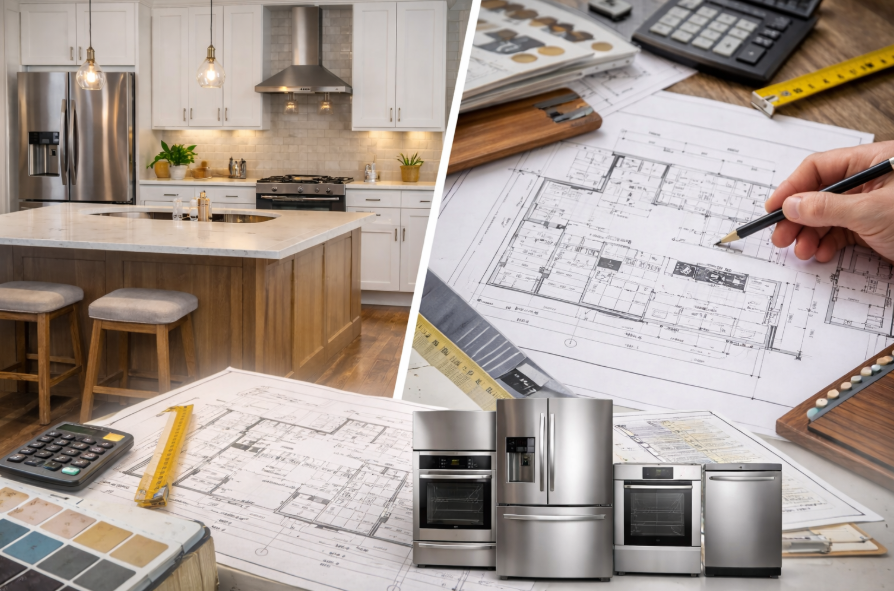
How appliance choices affect layouts and internal elevations
Every appliance has specific requirements for width, height, depth, ventilation, and door swing. Finalising a floor plan without these details often results in design compromises that could have been avoided with early appliance selection.
Selecting appliances before floor plans: dimensions and clearances
Appliances dictate cabinetry sizes, wall spacing, and circulation zones. Even small differences in dimensions can impact the overall layout, particularly in kitchens and laundries where space is tightly planned.
Internal elevations and cabinetry alignment
Internal elevations rely on exact appliance specifications to ensure ovens, dishwashers, and refrigerators align correctly with surrounding joinery. Appliances chosen early allow elevations to be drawn accurately and executed without adjustment during construction.
Kitchens, laundries and other key spaces
Different areas of the home are particularly sensitive to appliance planning, as they rely heavily on integrated cabinetry and precise service coordination.
Appliance planning in floor plans
Choosing between integrated or freestanding appliances can significantly change cabinetry design, storage capacity, and the overall visual balance of a kitchen. Early appliance selection supports better alignment of proportions and finishes.
Laundry and utility appliance layouts
Washer and dryer sizes affect cabinet depth, overhead storage, and benchtop space in laundries. Planning appliances early helps avoid awkward layouts and ensures the space remains practical and efficient.
Avoiding costly design changes during construction
One of the most common mistakes homeowners make is changing appliances after cabinetry has been ordered. Even minor changes can require new cabinetry, stone adjustments, or relocated services, leading to unnecessary delays and added costs.
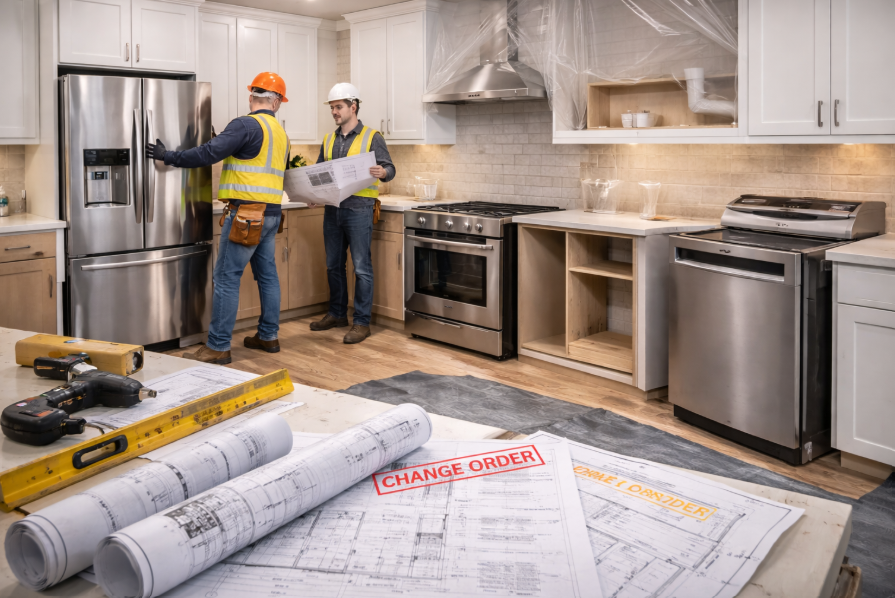
Better design results when appliances are selected early
From an aesthetic perspective, appliances are a major visual element. Early appliance selection allows finishes to be coordinated, elevations to feel balanced, and cabinetry to be designed intentionally rather than retrofitted.
Final thoughts
If you’re unsure where to start, working with an interior designer can make the process far easier. A designer can guide you through selecting appliances before floor plans are finalised, ensuring each choice aligns with your layout, cabinetry, and service requirements. This leads to more accurate drawings, smoother construction, and a better-designed home overall. Making these decisions early helps save time, money, and unnecessary stress later in the build process.

Contact us today at Design by Artisan to receive expert guidance and ensure your renovation or new build is thoughtfully planned from the very beginning.